
From listening processes and renewed networks to practical resources and Communion-wide resolutions, the ACC offered encouraging signs of years of patient investment bearing fruit.
The Anglican Alliance was delighted to participate in the Anglican Consultative Council that has just concluded in Belfast, Ireland. The Anglican Consultative Council (ACC) is one of the four instruments of Communion, and is the Anglican Communion’s most representative body, uniquely composed of bishops, clergy, and laity from each province. It meets approximately every three years to facilitate cooperative work, coordinate common action, and develop shared policies on matters like world mission and ecumenical relations.
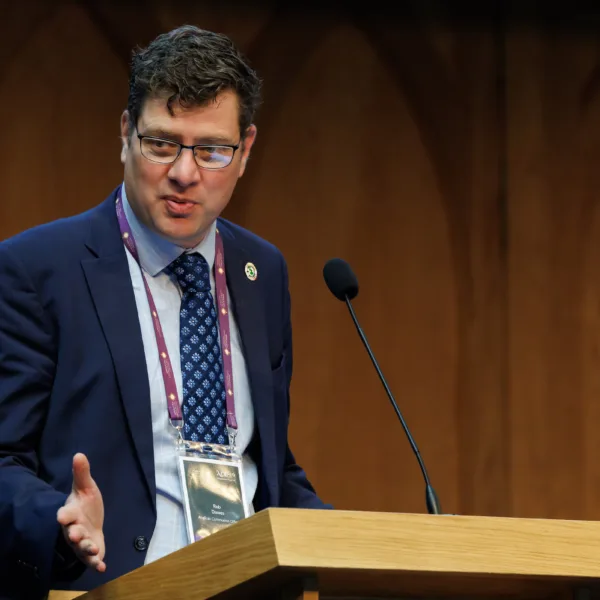
Rob Dawes of the ACO addresses the session on Listening Across Churches on Day 2 of the nineteenth Anglican Consultative Conference held at the Assembly Buildings Conference Centre. Monday 29 June 2026. Photo: Neil Turner for ACO
Rob Dawes, the Anglican Alliance’s executive director reflected, “The blessing of relationship, of simply being together and having the opportunity to hear how Anglicans around the world are making Christ’s love a practical reality in people’s lives was amazing. It was deeply encouraging to share stories, inspire one another, and discover how much more we can achieve together in serving our communities.
“It was also a joy to contribute to sessions and facilitate listening processes that lead to practical action for both the people we serve and the Church we serve. Alongside the important conversations about doctrine and policy, what stood out most was the shared commitment to living out the Gospel in tangible ways. That focus on working together to bring Christ’s love into the realities of everyday life was both hopeful and inspiring.”
Listening Across Churches
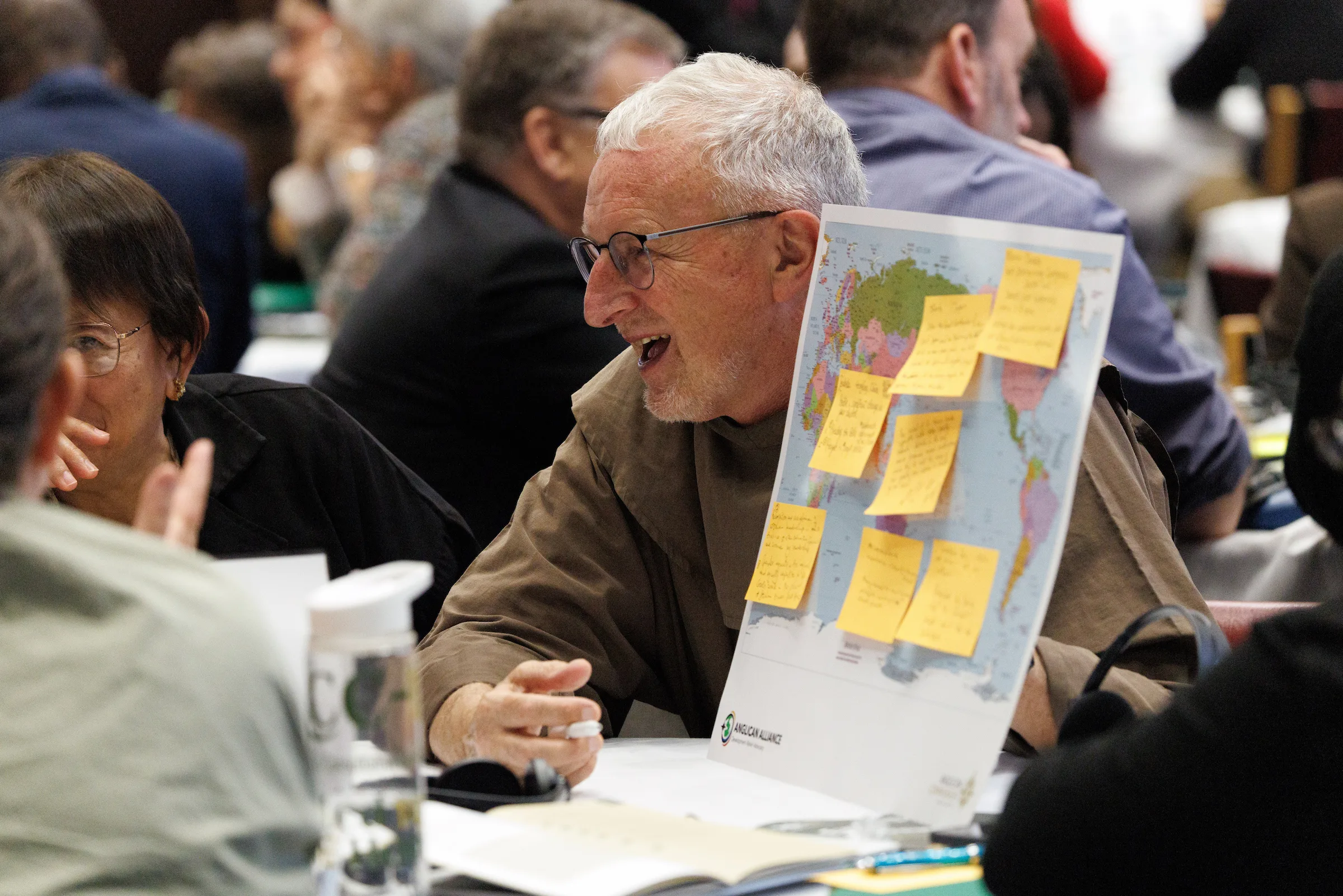
One of our key contributions was facilitating the daily “Listening Across Churches” sessions, which were designed to enable deep listening across delegates’ diverse contexts.
On Monday, the focus was on celebrating good news stories from our churches around the world. On Tuesday, participants talked about the challenges in their contexts and shared the changes they longed to see. Using jellybean ranking (see photo), the participants on each table surfaced challenges and hopes they could all relate to.
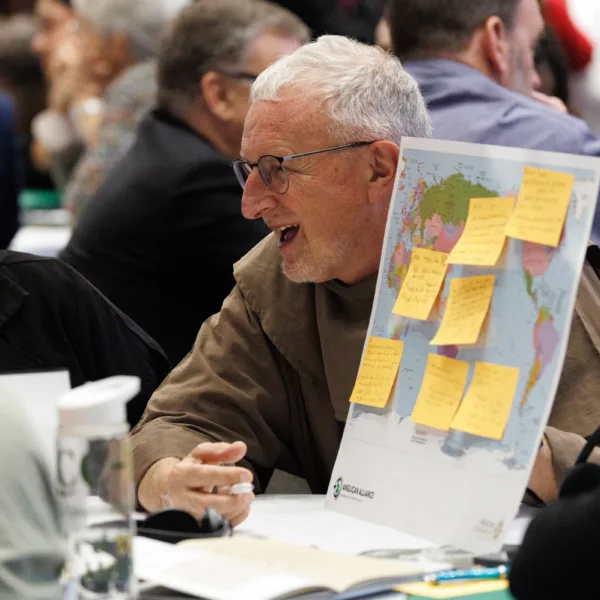
Delegates take part in the Listening Across Churches on Day 2 of the nineteenth Anglican Consultative Conference held at the Assembly Buildings Conference Centre. Monday 29 June 2026. Photo: Neil Turner for ACO
On Thursday, new groups were formed around the thematic areas that participants had shared on Tuesday. These were: Peace and Reconciliation; Embracing Difference; Inclusion – Ensuring Everyone Belongs; Overcoming Poverty; Justice; Identity, Hope and Purpose; Migrants and Displaced People; Caring for Creation; Children and Young People; Living Faith in Everyday Life; Discipleship; Evangelism; Leadership.
The new groups talked with each other about their shared concern and the change they longed to see. Together, they analysed the powers affecting life in their contexts by reflecting on the question “Who or what has the power to help or hinder the change you long to see?”. This conversation carried on into the Friday session, when they also discussed what we can do as a global community about the issue and what resources already exist to help us.
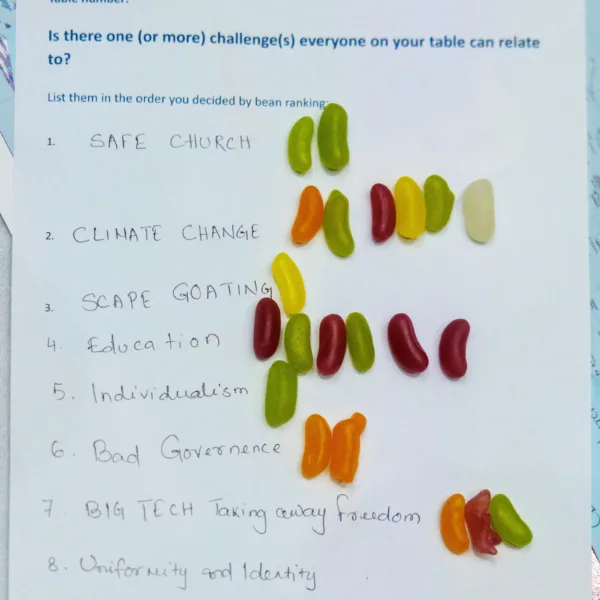
Jelly beans in use as a way of voting on tables during the session on Listening Across Churches . Photo: Neil Turner for ACO
The sessions were a taster of A Place at the Table – Reimagining Power Through Every Voice, the Anglican Alliance’s new flagship programme. A Place at the Table is a local and global process of deep listening, reimagining and collective action that centres the voices of those often unheard, releasing communities to act to reshape power and work together for justice, dignity and lasting change.
A key takeaway from the feedback was how interconnected all the areas of discussion were and how discipleship was at the heart of the how and why of our response – as well as the evident energy of ACC members to make a real difference in the world to enable people live more abundant lives.
Global Conversations
Each afternoon there was a global conversation exploring the church and world affairs, led by Anglican commissions, networks and staff.
The session on Refugees and Migrants highlighted moving examples of churches taking action around the world, including the Diocese of Egypt. Archbishop Samy Shehata talked about how their ministry echoes the refuge offered to the Holy Family two thousand years ago.
The new People on the Move resource, which the Anglican Alliance helped create, was presented to the ACC by Amy Bishop by remote link. People on the Move equips churches to welcome and support migrants, refugees and internally displaced people and offers a wealth of information and advice.
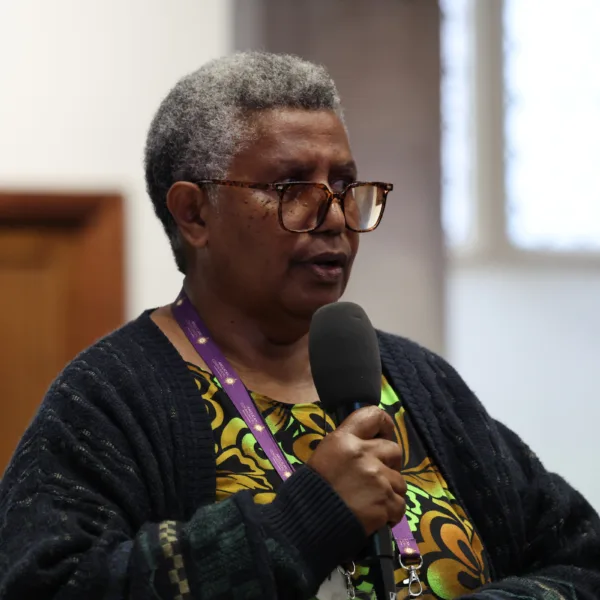
Ethel George. Photo: Neil Turner for ACO
The Environment global conversation was led by Archbishop Marinez Bassoto, primate of Brazil and chair of the Anglican Communion Environmental Network (ACEN). The conversation was structured around theology, practical action and advocacy.
The Communion Forest, which the Anglican Alliance manages with ACEN, was the focus for practical action. Ethel George, a key member of the Oceania Regional Advisory Council of the Anglican Alliance (ORAC) shared two stories from Vanuatu, one of seedling distribution on the Island of Pentecost at Pentecost, the other of the Melanesian Brothers who have created a Communion Forest nature reserve on the island of Ambae. Both stories can be found in our new resource: An A to Z of the Communion Forest.
Other global conversations highlighted the work of other networks that the Anglican Alliance has helped launch and/or supported. These include the Anglican Youth Network and the Anglican Health and Community Network, both of which the Anglican Alliance played a key role in bringing back to existence, and the Women’s Network and Family Network, which Mandy Marshall, the Anglican Alliance’s senior adviser for gender justice, in particular has supported. Mandy also played a critical role in the Safe Church Commission – a contribution for which she was acknowledged and warmly thanked.
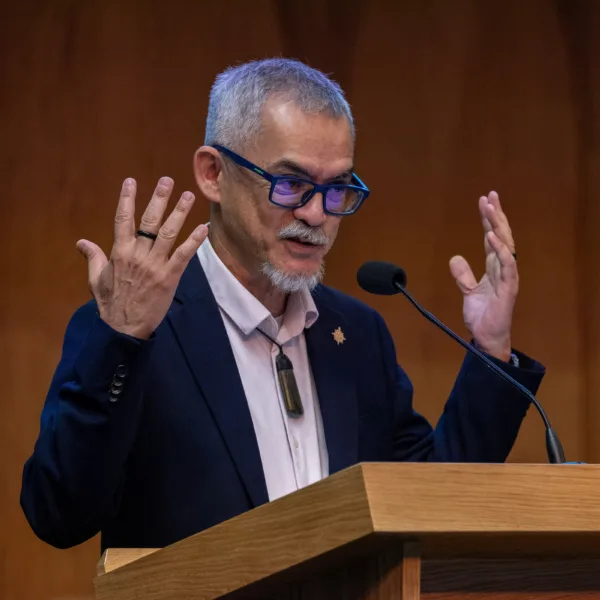
Paulo leading the Bible Study on Day 6. Photo: Neil Turner for ACO
Bible studies
Paulo Ueti, the Anglican Alliance’s theological adviser, played a leading role in the daily Bible studies, contributing to both their writing and delivery.
Fringe events
Each evening, fringe events were held, which provided an opportunity to hear in more depth about particular issues or areas of work.
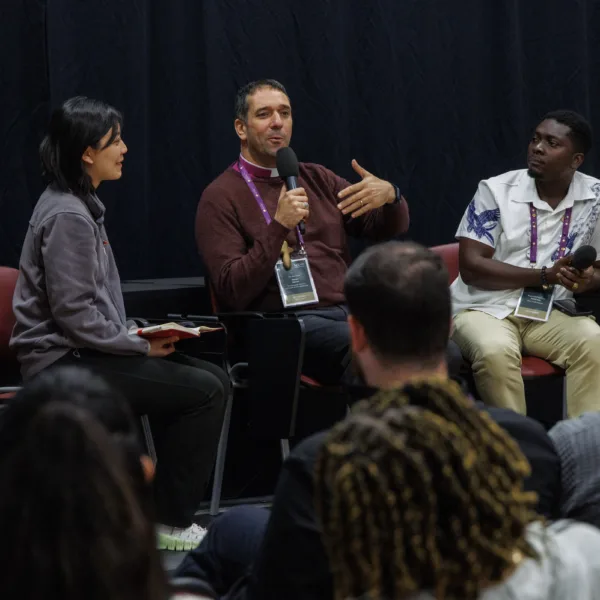
The Most Revd Hosam Naoum, The Episcopal Church in Jerusalem and the Middle East speaks at the Anglican Communion Youth Network . Photo: Neil Turner for ACO
The fringe event “A Living Legacy: Young Voices and the Work of Peace” brought together the Archbishop of Jerusalem, Hosam Naoum and young global leaders and drew a large audience. Hosted by the Anglican Communion Youth Network, the dialogue explored resilience, faithful leadership and hope amid global conflict. Reginald Robinson, one of the Anglican Alliance’s trustees co-chaired the session with Agnes Lam, the co-convener of the network.
The Anglican Alliance convenes and coordinates Anglican and wider ecumenical humanitarian responses for the Gaza / West Bank conflict. The ongoing emergency response supports the Diocese of Jerusalem’s provision of basic health and education services in the West Bank and emergency health services in Gaza through Al Ahli Hospital and satellite clinics.
We also held our own Anglican Alliance fringe event, which gave delegates the chance to find out more about our work, including the Communion Forest.
Our stall
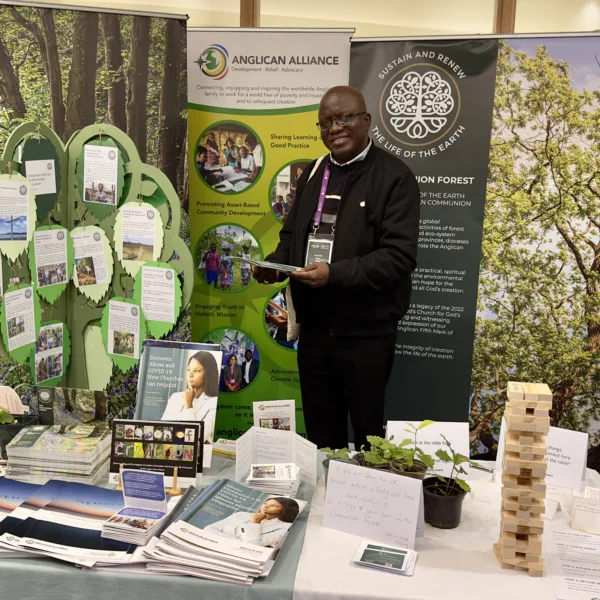
Archbishop Albert Chama, chair of the Anglican Alliance’s board of trustees, at our stall. Photo: Elizabeth Perry/Anglican Alliance.
Throughout the week, the Anglican Alliance had a prominent presence in the marketplace with an interactive stall. As well as offering resources on gender justice, migration, the Communion Forest and our work in general, the stall hosted an exhibition about the Communion Forest and provided the opportunity to engage with A Place at the Table – Reimagining Power Through Every Voice.
Visitors were invited to explore Reimagining Power through an interactive game of Power Jenga. Each block represented a different form of power, prompting the question: “When this form of power is concentrated in a few hands, who is least likely to have a place at the table?” Participants then completed a place card beginning, “A place at the table for…” and added it to a growing display, creating a powerful visual reminder that every voice matters and that all are called to flourish together.
Resolutions
The Anglican Alliance submitted six resolutions to the ACC, on:
- The Church, the Communion and the Disaster Cycle
- Welcoming Refugees, Migrants and Internally Displaced People
- Shrinking Civic Space and the Public Witness of the Church
- Reimagining Power for Flourishing Communities
- The Communion Forest
- Accelerating Gender Equality across the Anglican Communion and Ending Gender-Based Violence across the Anglican Communion
All were passed by consent. The full text of each is below.
Final thoughts
Elizabeth Perry, the Anglican Alliance’s Programmes Director, reflected, “There was deep encouragement in seeing so many of the conversations and priorities throughout the week reflect work that the Anglican Alliance has helped to nurture over many years. From renewed networks and practical resources to Communion-wide conversations and shared commitments, it was a joy to see seeds that have been patiently planted and nurtured bearing fruit across the Communion. Our calling is not to be at the centre of the story, but to connect, equip and inspire others so that, together, the whole Communion can flourish. Seeing those relationships, initiatives and shared commitments continue to grow was one of the greatest encouragements of ACC.”
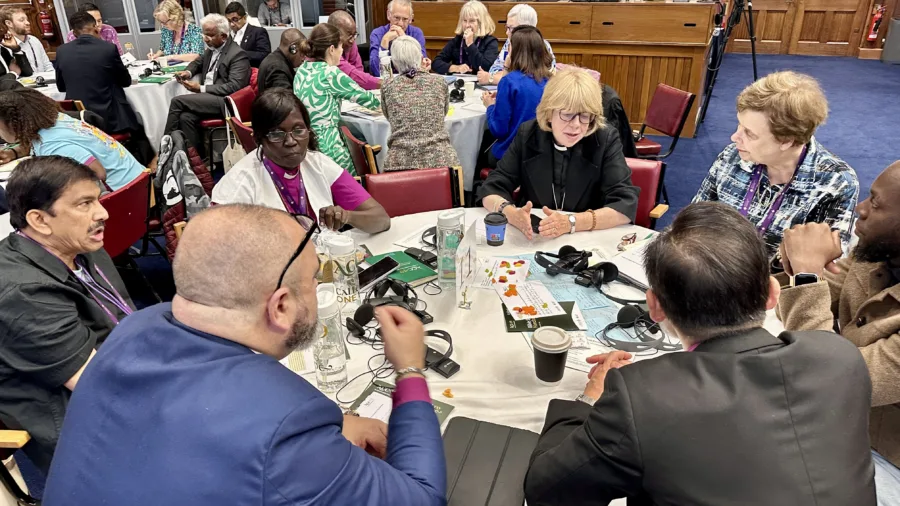
Archbishop of Canterbury Sarah Mullally in one of the Listening Across Churches sessions. Photo: Elizabeth Perry/Anglican Alliance.
The resolutions proposed by the Anglican Alliance. Text in full:
The Church, the Communion and the Disaster Cycle
The Anglican Consultative Council:
- encourages Member Churches to strengthen disaster preparedness, anticipatory action, response and recovery through planning, training, theological education, peer learning and accompaniment, including clear roles, communication pathways, staff care and duty of care arrangements;
- encourages Member Churches to build on existing Anglican, ecumenical, interfaith, community and humanitarian resources and partnerships, to engage with relevant coordination mechanisms, and to work in ways that strengthen local leadership and reduce the burden on affected churches; working with the Anglican Alliance and relevant Anglican Communion bodies, to support the development and piloting of Communion-wide guidance and coordination protocols for the disaster cycle; and
- encourages the sharing across the Communion of skills, funding, prayer, stories, experience and knowledge for advocacy, communications, learning and mutual support, and the use of the Anglican Disaster Risk Management Coordination Framework and other shared Anglican resources.
Welcoming Refugees, Migrants and Internally Displaced People
The Anglican Consultative Council:
- affirms the vocation of Christians to welcome and support refugees, migrants and internally displaced people in their communities, bearing witness to the Gospel through hospitality, pastoral care, practical assistance and advocacy;
- commends the People on the Move Resource as a practical tool to assist local churches in preparing to welcome, accompany and support refugees, migrants and internally displaced people, and encourages the churches to use and adapt it as appropriate in strengthening their responses in local contexts;
- recognises and affirms the role of the Global Anglican Working Group on Migration in equipping churches and Anglican partners across the Communion to share information, learning and good practice, and in helping to strengthen coordinated and contextually grounded Anglican responses to migration and displacement; and
- encourages Member Churches to engage with the Anglican Alliance, the Global Anglican Working Group on Migration and relevant Anglican Communion bodies in sharing resources, strengthening learning and collaboration, and supporting refugees, migrants and internally displaced people in ways that uphold their dignity, agency and wellbeing.
Shrinking Civic Space and the Public Witness of the Church
The Anglican Consultative Council:
- recognises that, in contexts of conflict, repression, and political instability, there is a growing restriction of civic space and church leaders may be among the few remaining public voices able to speak for human dignity, justice, peace and the common good;
- notes with concern that such witness may come at significant cost, including intimidation, isolation, reputational attack and threats to personal safety;
- encourages Member Churches to:
- pray for and stand in solidarity with church leaders, religious communities and all who seek to uphold human dignity and justice in such contexts;
- develop safe opportunities to share experience, discern faithfully and learn from one another;
- support theological reflection and formation on public witness, reconciliation, peacebuilding and the pastoral responsibilities of the Church in contested political contexts; and
- strengthen, where it is safe to do so, partnerships with ecumenical, interfaith and civil organisations in support of peace, justice and the common good.
Reimagining Power for Flourishing Communities
The Anglican Consultative Council:
- affirms that, in the life, death and resurrection of Jesus Christ, power is revealed not as domination but as servant-hearted love, justice, accountability and the flourishing of all God’s people, and laments the harm caused when power excludes, silences or marginalises individuals and communities;
- notes the Anglican Alliance initiative A Place at the Table – Reimagining Power Through Every Voice as a faith-rooted process of listening, reflection and action for communities seeking to reimagine power in ways that support justice, dignity and flourishing;
- encourages Member Churches to create safe and participatory spaces for deep listening, to examine how power is held and shared in church and society, to nurture Christ-like and inclusive leadership, and to support locally owned action and advocacy shaped by the voices of communities most often marginalised; and
- requests the Secretary General, working with the Anglican Alliance and relevant Anglican Communion bodies, to share and adapt A Place at the Table – Reimagining Power Through Every Voice resources across the Communion, and to support leadership development programmes that equip churches to engage faithfully with the Communion’s diversity – encompassing race, caste, ethnicity, tribe, and native, Indigenous and traditional peoples – in order to sustain the unity of the Church in navigating its differences.
Communion Forest
The Anglican Consultative Council:
- requests Member Churches to encourage every diocese of the Communion to have an expression of the Communion Forest by August 2028, whether practical, spiritual, advocacy-based or a combination of these;
- invites Anglicans across the Communion to take part in this shared calling through prayer, advocacy and practical action, including through the simple challenge of One Anglican, One Plant and, where possible, one act of care for creation, as a sign of commitment to the flourishing of God’s creation;
- invites Anglicans across the Communion to advocate for the restoration and protection of the Lungs of the Earth; and
- asks Member Churches to collaborate with the Anglican Alliance, the Anglican Communion Environmental Network and other partners to support churches in caring for creation, protecting biodiversity, restoring ecosystems, and promoting climate justice.
Accelerating Gender Equality across the Anglican Communion
The Anglican Consultative Council:
- recalling ACC Resolution 14:33 (2009), reaffirms its commitment to gender balanced leadership of all Commissions and Networks of the ACC and requests that they report on their progress at ACC-20; and
- requests Member Churches to implement gender budgeting across their finances by allocating additional resources to ensure gender inclusivity and equality, in accordance with ACC Resolution 14:33.
Ending Gender-Based Violence across the Anglican Communion
The Anglican Consultative Council:
- requests concerted, long term, sustainable effort, programmes and funding on gender equality, justice and ending gender-based violence at parish, diocese and provincial level, working with the Anglican Alliance, Mothers’ Union, International Anglican Womens Network and Anglican Communion Youth Network, to address these long- term injustices and violence; and
- commits to discipleship that challenges harmful cultural and traditional norms that hinder, inhibit and abuse a person made in the image of God from realizing their full potential in life.
