
On 3 August, the Communion Forest celebrates its fourth birthday. Since its launch at the Lambeth Conference in 2022, the Anglican Alliance has stewarded the Communion Forest in partnership with the Anglican Communion Environmental Network, helping a bold vision grow into an extraordinary global movement of Anglicans caring for creation.
Four years ago, bishops gathered in the garden of Lambeth Palace to plant a symbolic tree.
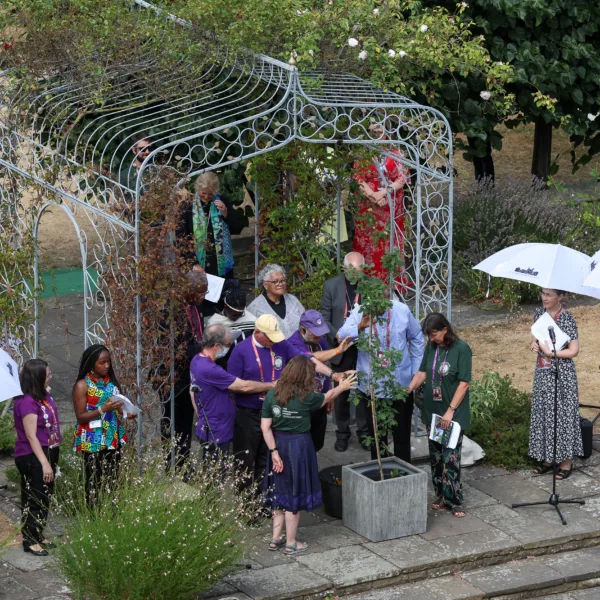
Launch of the Communion Forest at Lambeth Palace during the 2022 Lambeth Conference. Photo: Ian Walton for The Lambeth Conference. Wednesday 3rd August 2022
It was 3 August 2022, during the Lambeth Conference, and the planting marked the launch of the Communion Forest: a new initiative intended to help Anglicans across the world respond together to the environmental crisis.
The vision was both simple and ambitious. Rather than create one centrally managed programme, the Communion Forest would connect, equip and inspire Anglicans to protect and restore the ecosystems around them, building on the environmental work already happening across the Communion. Since its launch, the Anglican Alliance has stewarded the initiative with the Anglican Communion Environmental Network, working behind the scenes to develop partnerships, secure funding, connect provinces and dioceses, share stories and resources, and support its continued growth. It is a living expression of the Fifth Mark of Mission: to strive to safeguard the integrity of creation and sustain and renew the life of the earth.
Four years later, that symbolic tree has become something much bigger.
One forest, many ecosystems
Despite its name, the Communion Forest was never intended to be simply about forests – or even simply about planting trees.
Its strength lies in being locally led. Communities discern what creation care means in their place, responding to their own ecology, culture and circumstances. The result is an initiative of remarkable geographical and ecological diversity: forests and mangroves, wetlands and riverbanks, grasslands and prairies, urban gardens and coastal ecosystems.
The new A to Z of the Communion Forest offers a glimpse of what that looks like in practice, travelling from Australia to Zimbabwe and telling stories of restoration, protection, prayer, advocacy and hope.
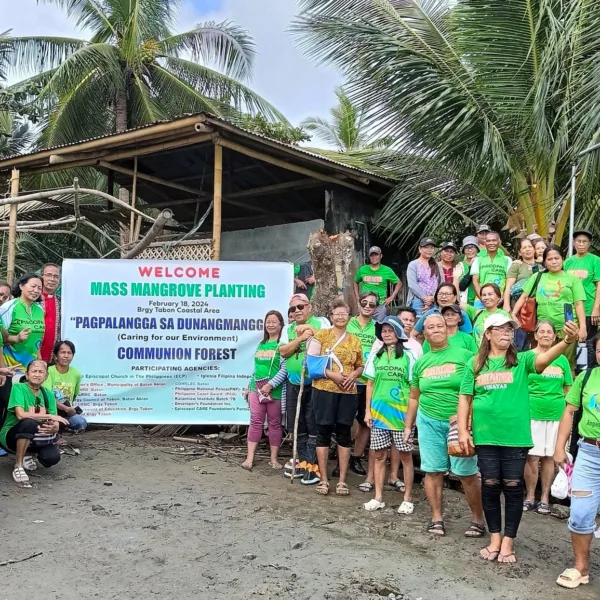 In the Philippines (left), Anglicans have worked ecumenically to restore vital coastal ecosystems, including a mass mangrove planting in the Visayas in 2025. In the Democratic Republic of the Congo, Bishop William Bahemuka Mugeni has chosen to protect natural forest and restore land rather than clear it for cocoa, creating habitat for birds, insects and other wildlife. In England, 100 acres beside the River Wye are being restored at Bartonsham Meadows. And across the prairie belt of the United States, prairie restoration that began in the Diocese of Kansas has spread to other dioceses.
There are mangroves being restored in Mozambique and Sri Lanka; trees being grown for resilience in Papua New Guinea; native trees connecting communities in Canada and Uganda; and forests being protected and restored across Africa.
Together, these locally rooted actions are turning the Communion Forest into one of the most geographically widespread and ecologically diverse environmental initiatives in the world.
Caring for creation – with hands, hearts and prayers
But perhaps one of the most distinctive things to have emerged over the past four years is the way the Communion Forest has helped Anglicans connect practical care for biodiversity with spiritual life.
Trees and ecosystems have become places of prayer and encounter with God. They have been woven into confirmations and other rites of passage, worship, theological reflection and public witness.
In Gippsland, Australia, communities are planting “prayer trees” as signs of faith, hope and love, creating a dispersed forest across the diocese. People can leave written prayers on the trees, taking prayer beyond the walls of the church.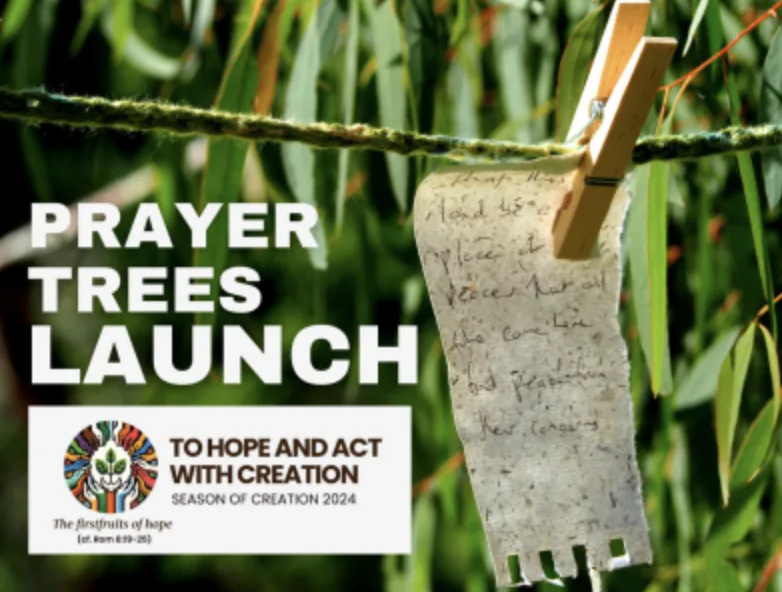
In Bangladesh, clergy, young people and lay communities are being encouraged through sermons, revival meetings and tree planting to understand care for creation as part of their spiritual calling. Confirmation candidates are invited to plant and tend trees.
And in Palmas, Brazil, the connection between spirituality and biodiversity changed the course of a church building project. A parish had planned to clear a wooded site to build a new church. Inspired by the Communion Forest, the community decided instead to preserve the trees and turn the land into a prayer garden – creating a place where people can encounter God through the natural world.
Even in the heart of London, prayer has quite literally flowered. After a Communion Forest exhibition at Westminster Abbey, visitors’ prayer slips – printed on wildflower-embedded paper – were planted outside. Months later, the lawn blossomed with wildflowers and a native orchid, dormant for years, re-emerged.
These stories capture something fundamental about the Communion Forest: biodiversity is not simply an environmental issue to be addressed, but part of creation with which Christians are called into relationship.
“The Communion Forest may be the most inclusive and accessible initiative within the Anglican Communion, as it embraces all scales and forms of environmental action – personal or institutional – allowing individuals and communities alike to discover their unique vocation in caring for God’s creation.”
— Bishop Maurício Andrade, Bishop of Brasilia
From local action to global witness
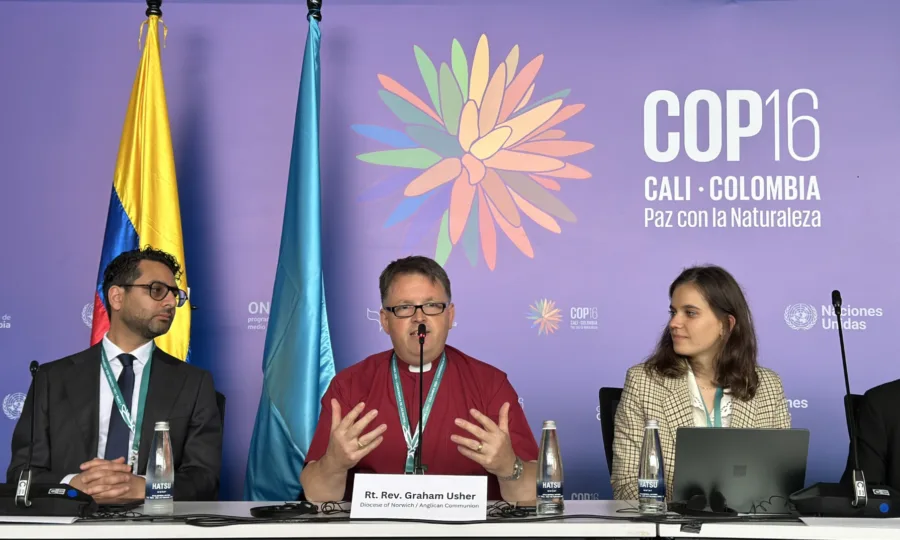 Over its first four years, the Communion Forest has also helped connect local action with advocacy for wider environmental change.
Anglican voices have taken the experience of communities planting, protecting and restoring creation into international environmental spaces, including the UN Convention on Biological Diversity.
“The Communion Forest gives credibility to the Anglican Communion’s advocacy in spaces like the UN Convention on Biodiversity. It shows we are not just telling others what to do – we are planting, restoring and protecting creation ourselves.”
— Nicholas Pande, Communion Forest Global Facilitator
While the Communion Forest is expressed through thousands of locally led initiatives, its growth has been supported by the Anglican Alliance, working in partnership with the Anglican Communion Environmental Network. Since 2022, the Alliance has stewarded the initiative, developed resources, secured funding, built partnerships, supported facilitators and created opportunities for Anglicans across the Communion to learn from and inspire one another. In doing so, it has helped a symbolic tree planting at Lambeth Palace grow into a truly global movement.
That combination – practical action, spiritual engagement and advocacy – has been part of the vision from the beginning. The Communion Forest does not prescribe one model or measure success simply by counting trees. Instead, it invites Anglicans to look carefully at the places where they live, ask what needs protecting or restoring, pray and learn, and then act with others.
A to Z – and still growing
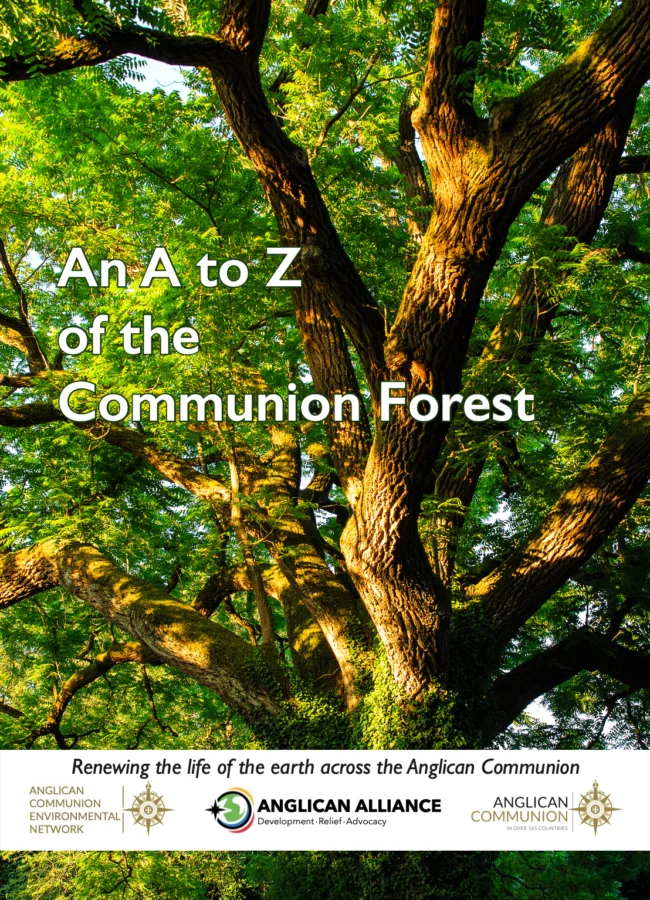 Four years after that first symbolic planting at Lambeth Palace, perhaps the best way to understand the Communion Forest is through its stories—and through the network of relationships that has helped those stories be shared across the Anglican Communion.
The A to Z of the Communion Forest brings many of them together: stories of people protecting existing forests rather than cutting them down; restoring mangroves and meadows; growing food; creating habitat; walking and praying through threatened landscapes; marking confirmations, birthdays and other moments of life by planting trees; working alongside Indigenous communities; and speaking up for environmental justice.
Taken together, they reveal a forest that no one could have designed centrally – because it is growing out of the landscapes, cultures, faith and imagination of communities across the Anglican Communion.
And there is plenty of room for new growth.
So, as the Communion Forest celebrates its fourth birthday, explore the A to Z, be inspired by what Anglicans around the world are already doing – and ask what your own expression of the Communion Forest might be.
As the Communion Forest enters its fifth year, the Anglican Alliance remains committed to supporting this growing global movement, helping connect local stories of restoration into a shared witness of hope across the Anglican Communion.
Explore the Communion Forest and its resources
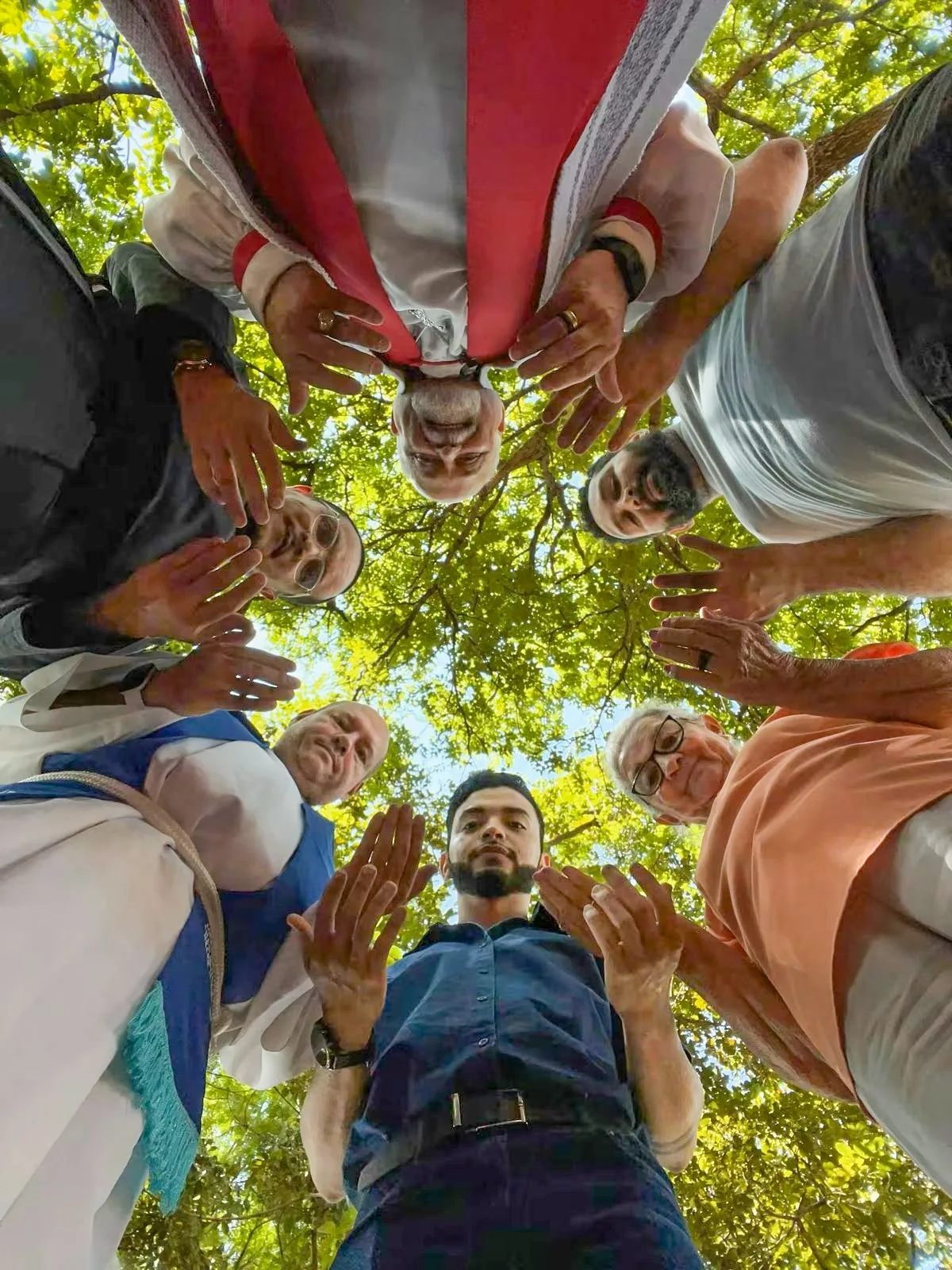
Feature image: In Palmas, central Brazil, a parish originally planned to clear a wooded area to build a new church. However, after reflecting on the Communion Forest’s call to care for creation, the community made a radical choice: instead of cutting down the trees, they left them standing and transformed the site into a prayer garden. Today, this quiet oasis in the heart of the city offers a space where worshippers can connect with God through the natural world. It also stands as a visible symbol of environmental stewardship, inspiring the wider community to protect and cherish the land.
