
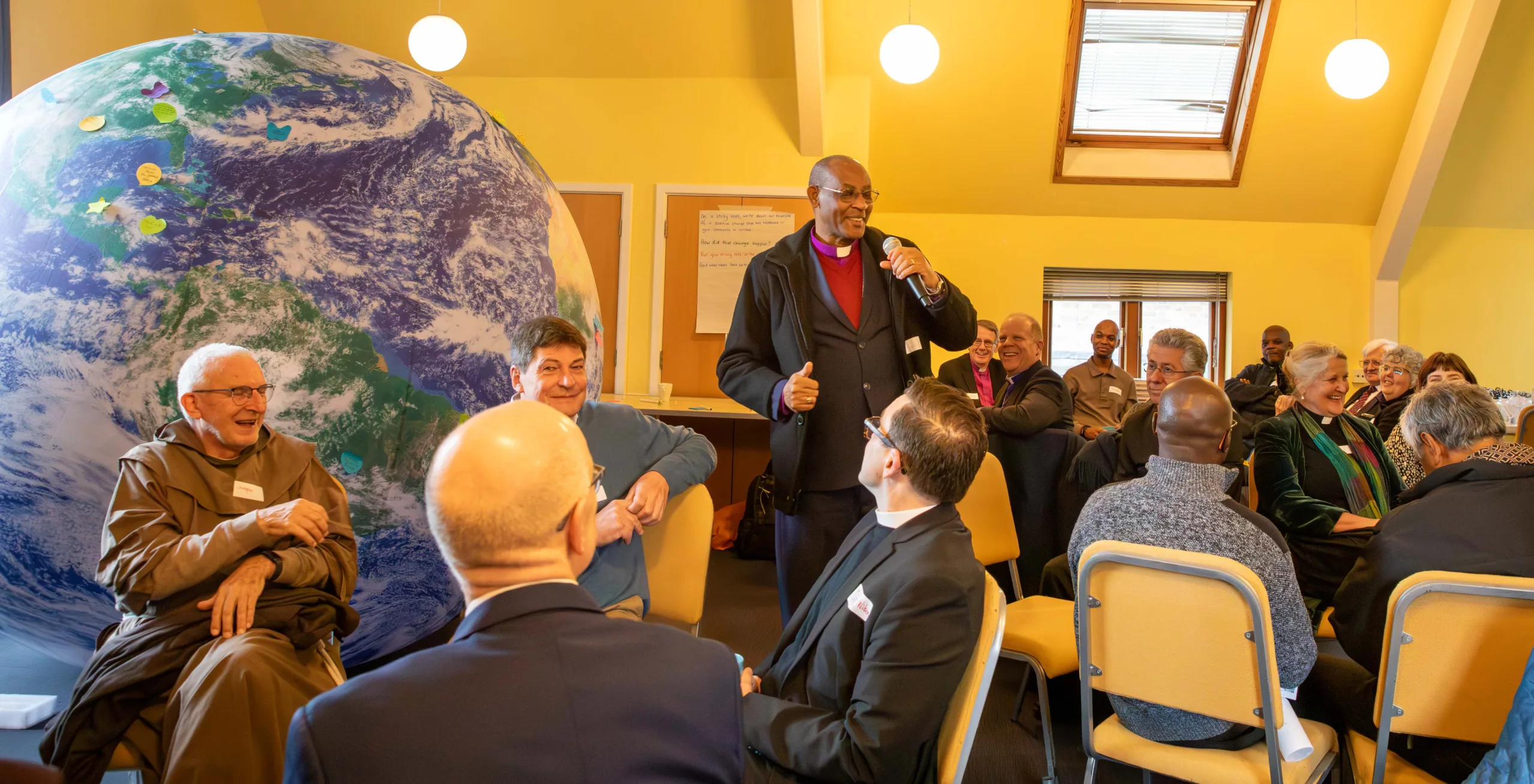
“For everyone born, a place at the table…”
On the morning of Archbishop Sarah Mullally’s installation in Canterbury, a unique gathering took place. Inside St Mary Bredin Church, more than fifty leaders from across the Anglican Communion – and beyond – came together: primates, archbishops, bishops, youth leaders, representatives of Anglican Communion networks and heads of Anglican relief, development and mission agencies sat side by side. Not to debate; not to present; but to listen.
Beginning with Hope
The session opened not with problems, but with possibility. As participants arrived, they were invited to reflect on a simple question: Where have you seen positive change?
Stories began to fill the room – and the map: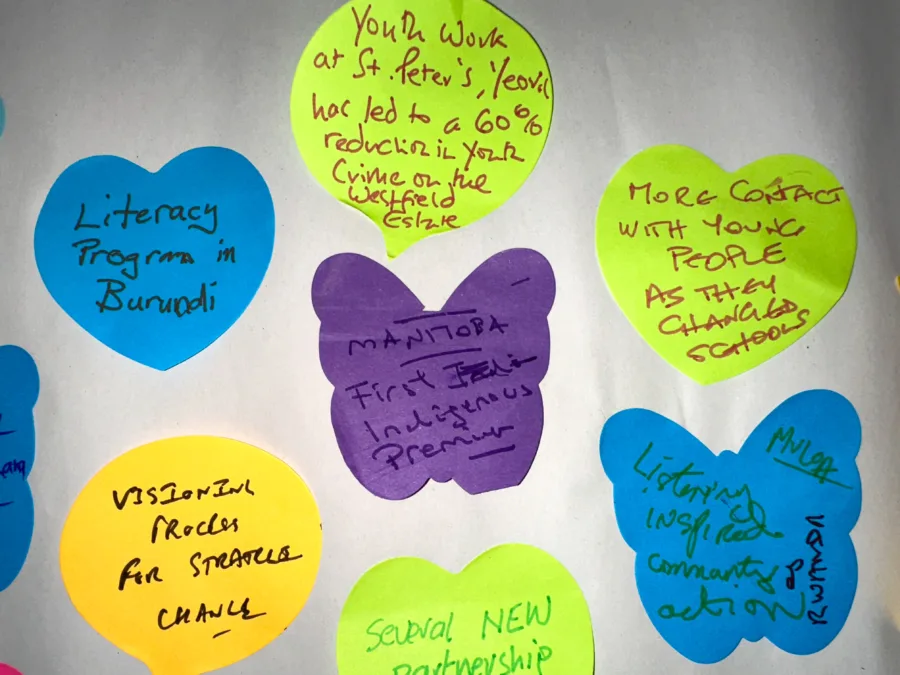
- communities where youth crime had fallen
- churches growing in new and unexpected ways
- long journeys towards recognising the leadership of women
- global institutions learning to work more closely with faith communities
Before anything else, the room was grounded in a shared truth: change is possible and is already happening.
Naming What Matters Most
From that place of hope, the conversation turned to a question: What is the change most needed in your community or context?
The answers came from every corner of the world and yet they echoed one another. Participants spoke of:
- poverty and livelihoods
- health systems under strain
- women’s empowerment
- young people facing addiction and violence
- housing crises
- environmental breakdown
- the need for deeper discipleship and renewed faith
As one participant said, “I was struck that they all seem to be basic needs. And I was surprised at that, actually.”
The most recurrent theme was the deep and urgent need to rethink how we live with difference. People identified fear of the ‘other’, rising nationalism, division, suspicion and fragmentation – and, alongside it, a longing for openness, for kindness and for seeing difference not as a threat but as a gift.
Looking at Power
Naming the need was only the beginning. The harder question followed: Who – or what -has the power to help or hinder the change you want to see?
Around the room, intense and thoughtful conversations took off. Governments were named – capable of enabling change but often failing to act. Economic systems – sometimes lifting people up, often holding them down. Church leadership – both a source of transformation and, at times, a barrier.
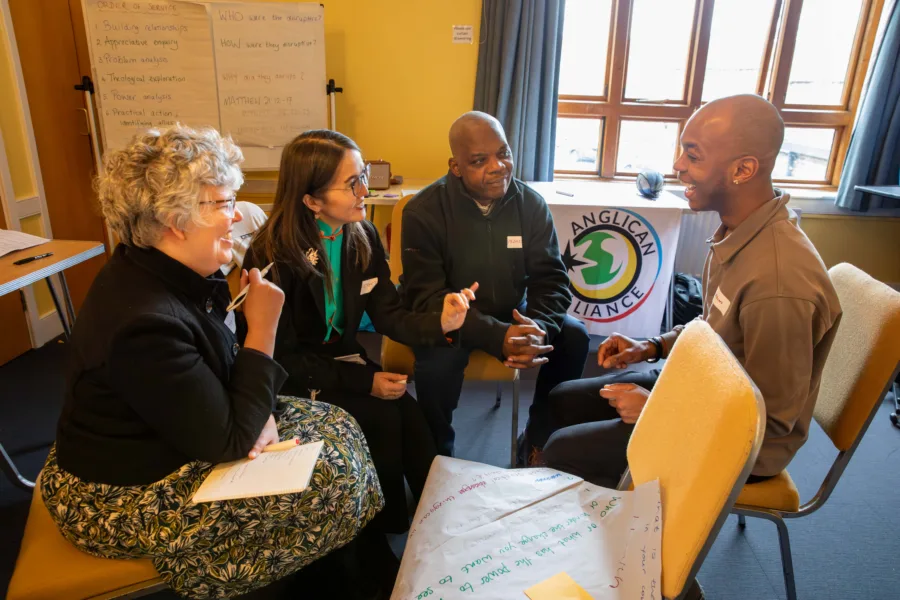 Again and again, one quieter but powerful force emerged: mindset… the assumptions we carry about power, about responsibility, about what is possible. As one participant put it, the challenge is not only what is done to communities – but what people believe they can do for themselves.
Disruption and Discernment
At the heart of the session was a moment of reflection on a familiar story: Jesus overturning the tables in the temple. It is a story of disruption. But as participants explored it together, the picture became more complex. Jesus disrupts. The children, shouting “Hosanna,” disrupt. Even those exploiting the system are, in their own way, disruptors – of God’s purposes for abundance and fullness of life. This raised an uncomfortable but necessary question: are we disrupting in ways that restore justice – or distort it? And how do we discern which “tables” need overturning first?
A Church with Untapped Power
As the morning unfolded, a pattern began to emerge. Again and again, participants spoke about the Church – not just as an institution, but as a force. A global community; a network rooted in local realities; a body with a unique ability to convene, to connect and to act.
One observer captured it simply: “The Church is a sleeping giant.”
There was a growing sense that the resources for change are already present, but they are not yet fully connected or mobilised. And there was recognition that people are not yet fully heard – especially at the grassroots.
Power Together
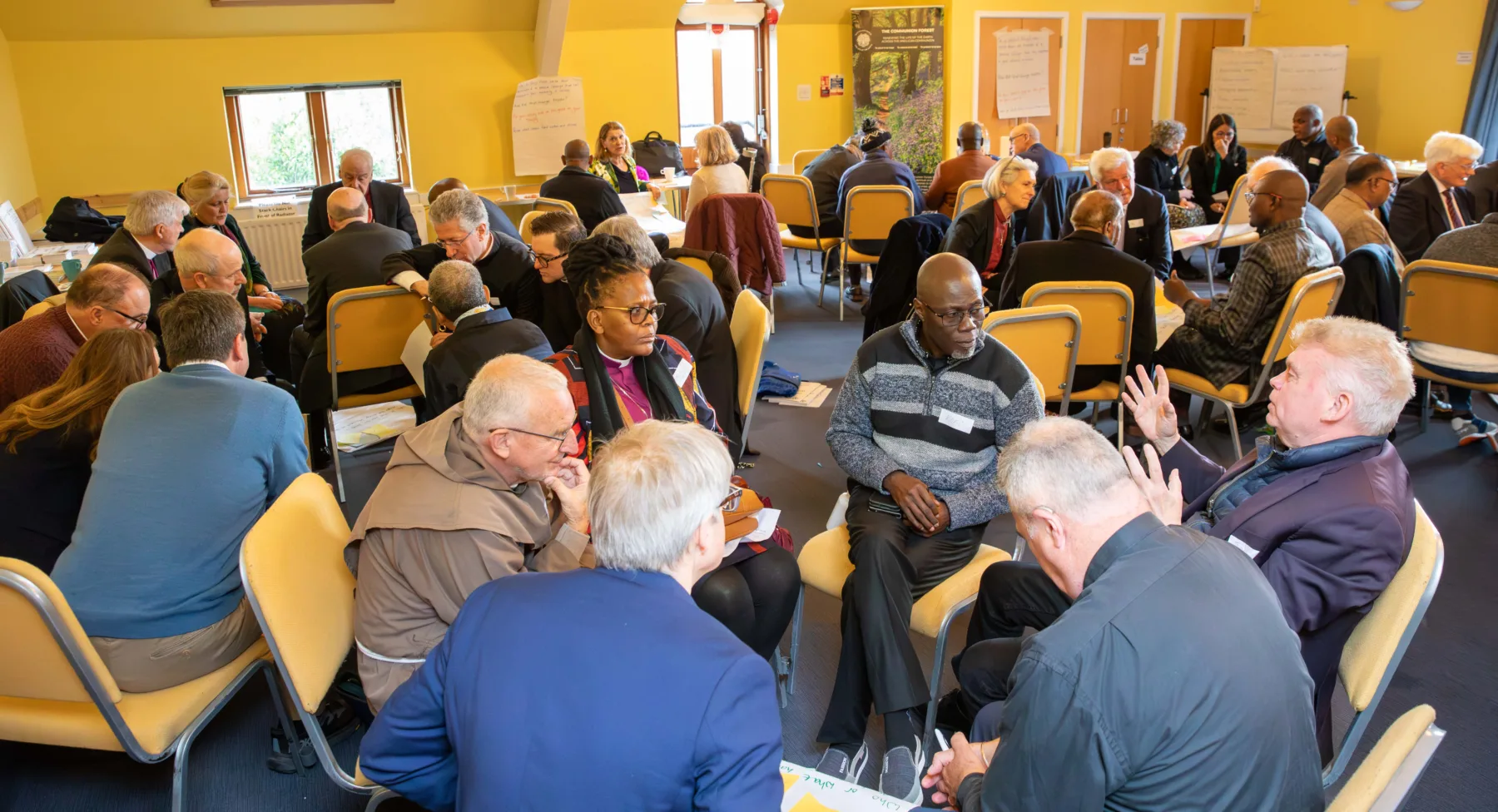
At the heart of the day was a simple but powerful conviction: power is not meant to be held over others but shared. As Rob Dawes, Executive Director of the Anglican Alliance, said, “The only thing that challenges power over is power together.”
This means:
- listening deeply to those whose voices are often unheard
- building relationships across boundaries
- supporting leaders with honesty and vulnerability
- working not in competition, but in solidarity
It also means recognising that change happens at every level – from grassroots action to global advocacy – and that both are needed.
From Conversation to Movement
What took place in Canterbury was not intended to be a one-off event. It was a glimpse and a first step in a wider process.
Reimagining Power is a process being developed by the Anglican Alliance as a way for communities across the Anglican Communion to:
- listen to their own contexts
- name the changes they long to see
- understand the forces shaping those realities
- and act together for transformation
By gathering and collating these insights across the world through use of an app, the hope is to see patterns, build connections and take collective action rooted in real lives and real needs.
A Reason for Hope
As the session drew to a close, there was, of course, no sense that the challenges had been resolved. If anything, their complexity and scale felt somewhat overwhelming. And yet, there was hope: hope in the honesty of the conversations; hope in the willingness to listen; hope in the recognition that no one stands alone.
And this hope is rooted in faith – that God is at work among us, “that all might have life and have it abundantly” (John 10:10).
Two simple truths lingered: culture is not fixed – it can change – and all systems of power, however strong, are not permanent.
A Place at the Table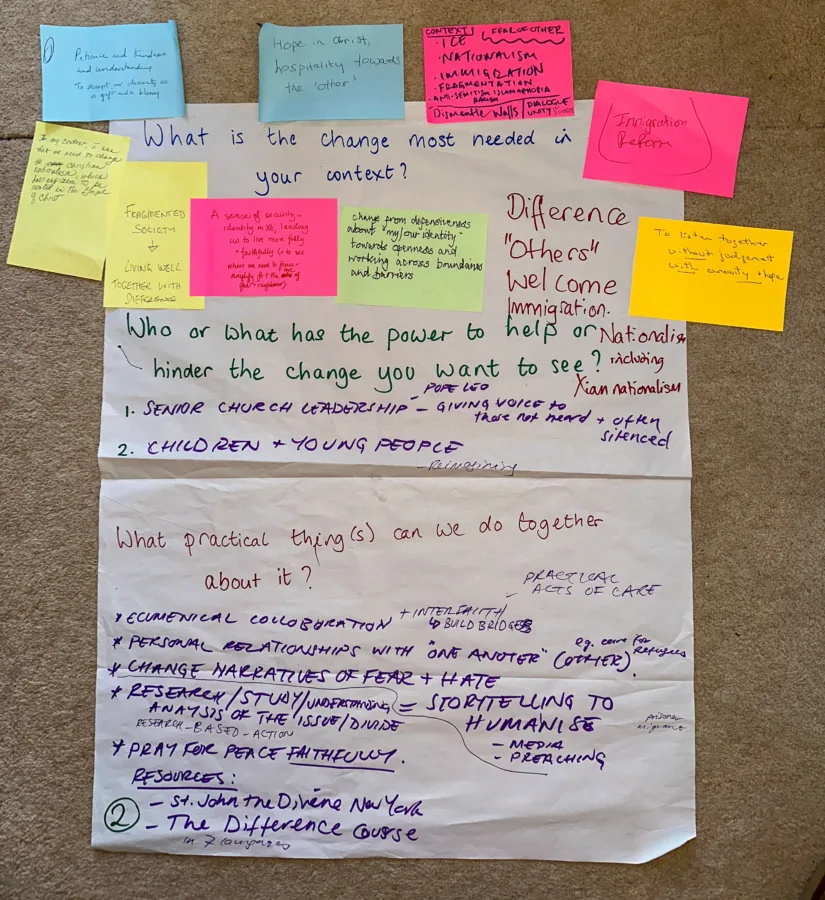
The vision that emerged is both simple and profound.
A world where:
- everyone has a place
- every voice is heard
- power is shared with wisdom and grace
A Church that creates space:
- for justice and joy,
- for compassion and peace.
Because, ultimately, reimagining power is not about structures alone. It is about people. And the belief that, together and with God, change is possible.
