
On 2nd December, we mark the International Day for the Abolition of Slavery and eleven years since faith leaders signed the Joint Declaration of Faith Leaders Against Modern Slavery, a powerful commitment to ending exploitation.
Today, modern slavery and human trafficking remain urgent global challenges, with an estimated 50 million victims worldwide. Churches, rooted in local communities, are uniquely positioned to respond. Their presence on the ground gives them insight into the vulnerabilities and risks faced by those most at risk, enabling them to raise awareness and take action using the resources available to them.
This was powerfully demonstrated at the recent Anti-Human Trafficking and Modern Slavery Conference hosted by USPG and the Diocese of Durgapur in the Church of North India in November. Representatives from across the Anglican Communion and beyond, including three members of the Anglican Alliance staff team, gathered to share experiences and strategies for tackling human trafficking in their contexts.
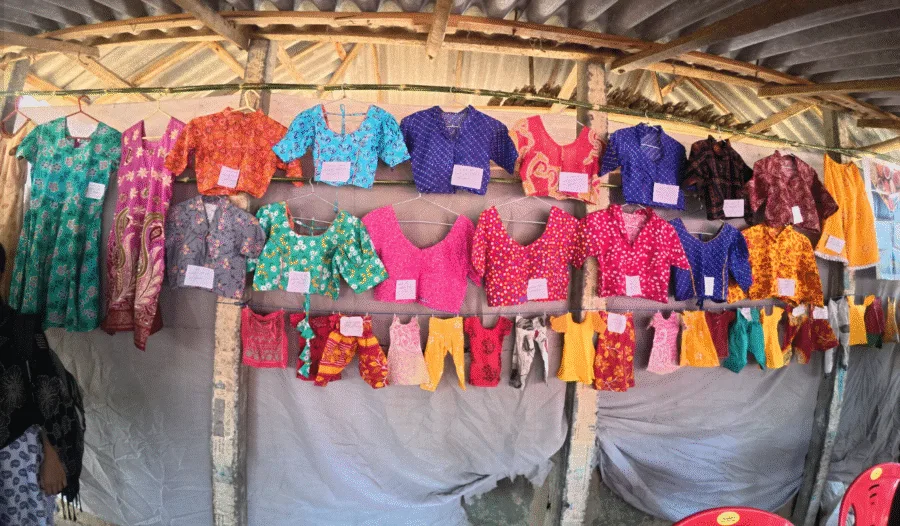
Garments made as part of the livelihoods programme. Photo: USPG and Diocese of Durgapur.
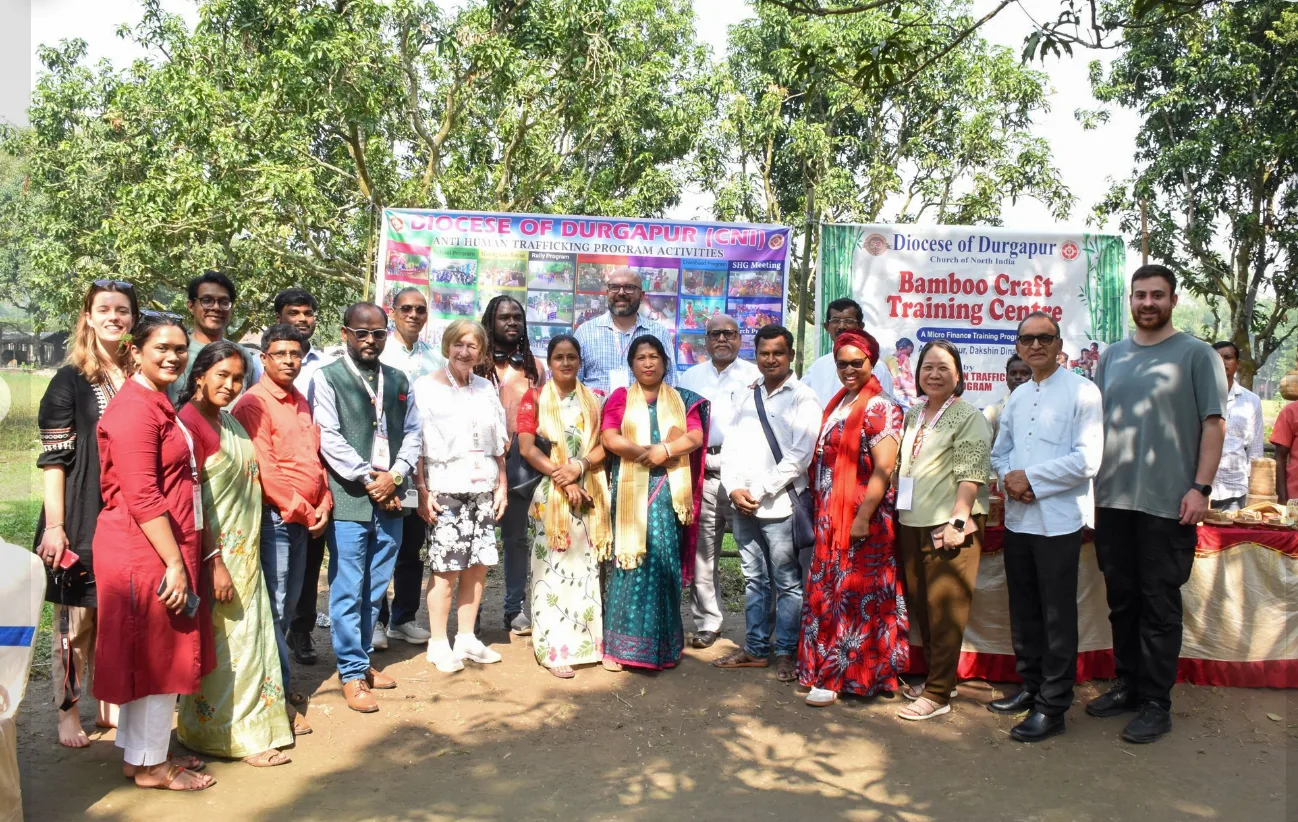
The Diocese of Durgapur demonstrated an inspiring example of local action. Partnering with USPG, they have focused on prevention and protection, particularly in rural communities where vulnerability to trafficking is high. Through local churches, they have raised awareness and equipped communities with livelihood skills such as basket weaving and garment making, reducing the economic pressures that often lead to exploitation. During the conference, participants visited Malda, near the Bangladesh border, to meet communities benefiting from these initiatives. This visit highlighted the critical role churches play in empowering communities and preventing trafficking before it happens. Through their partnership, the diocese is also supporting a safe house for children, providing support and education in order to keep safe those vulnerable to trafficking.
Amy Bishop, Anglican Alliance Programme Officer commented: ‘Visiting the church-led projects firsthand provided a valuable opportunity to learn how churches are preventing human trafficking in their local contexts. Seeing their impact on the ground, alongside the collaboration and shared learning at the conference, demonstrated the unique role churches can play in combatting trafficking.’
The conference provided space for collaboration, exploring how churches can work together globally. We heard examples from many other countries and churches across the Anglican Communion and were able to collaborate and explore how churches can work together globally to combat the issue.
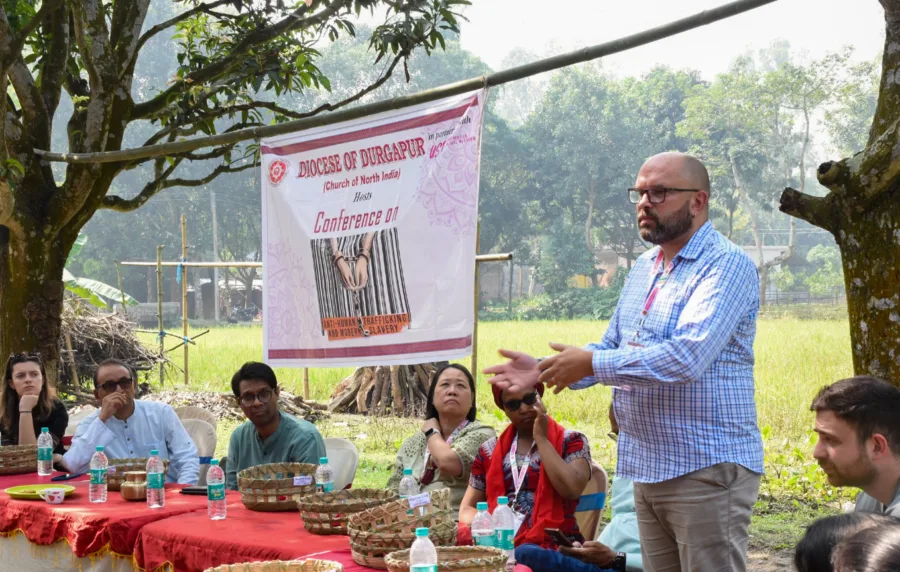
Rodrigo Espiuca speaking during the conference. Photo: USPG and Diocese of Durgapur.
During the conference, Clifton Nedd, Anglican Alliance regional facilitator for the Caribbean shared on the work taking place regionally with the Chaplaincy of Migrants in the Diocese of Trinidad and Tobago who are providing practical support refugees and migrants in the diocese. Rodrigo Espiuca, Anglican Alliance Communion Forest Facilitator for Latin America, was able to share about how human trafficking is especially impacting rural communities in Brazil through labour exploitation.
The Anglican Alliance shared on its ongoing work in providing support to churches across the Anglican Communion working against human trafficking and modern slavery. We have run a series of regional workshops in partnership with the Salvation Army, helping connect and equip churches regionally as they respond to the patterns of exploitation and trafficking taking place in their area. We shared about our current focus on safe migration, helping churches support migrants before, during and after their journeys to reduce vulnerability to exploitation. The Anglican Alliance facilitates a global migration working group, bringing together those working to support migrants across the Anglican Communion to share learning and support one another in our work. Last year, we relaunched an updated Freedom Sunday resource, offering prayers, sermon outlines, hymns, and practical tools for churches to raise awareness. You can find out more about our work in this area, download reports from our past workshops and download the
Freedom Sunday resource on our webpage here: Resources – Anglican Alliance
All of this highlights the essential role of churches in the fight against modern slavery. Their deep connection to local contexts and ability to mobilize resources make them powerful agents of change. By walking alongside communities, churches can help address the root causes of exploitation and build pathways to freedom.
Join us as we stand together on this day in raising awareness of this global evil and join us in praying for the work of churches and faith communities across the world, working on the frontlines in communities to protect the most vulnerable and provide support to victims.
Featured image: Participants on the visit to Diocese of Durgapur projects that reduce the risk of trafficking. credit: USPG and Diocese of Durgapur.
